


Emergency Repairs Made Easy: Keep Tenants Safe and Satisfied
Published : 19 Dec 2025
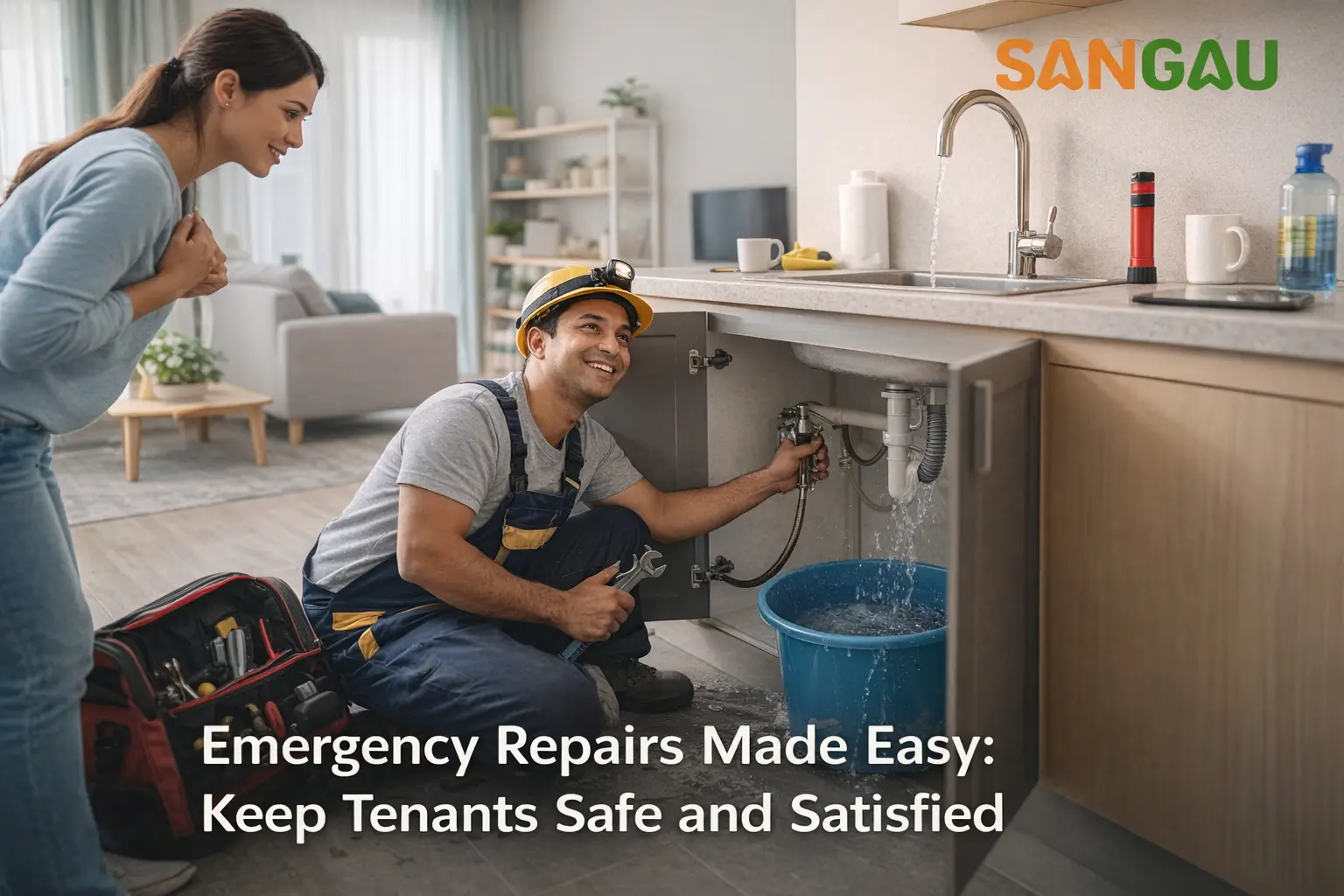
Emergency Repairs Made Easy: Keep Tenants Safe and Satisfied
Emergencies are an inevitable part of property management—especially in a bustling city like Bengaluru. From sudden plumbing issues to unexpected electrical faults or even gas leaks, such situations demand swift and effective action. But beyond the urgency, it’s how you manage these scenarios that defines your professionalism and impacts tenant satisfaction.
At SANGAU, we understand that managing emergency repairs is not just about fixing the issue. It’s about reassuring tenants, maintaining trust, and protecting your property’s long-term value. In this article, we’ll walk you through proven strategies to handle emergency repairs with efficiency, empathy, and clear communication.
1. Clearly Define What Qualifies as an Emergency
Not every problem warrants immediate attention. While a flickering light might annoy tenants, it’s hardly the same as a gas leak or a flooding bathroom. Property managers should establish and share a clear list of what constitutes an emergency—such as complete power outages, severe water leaks, or fire risks. Including this information in lease agreements and tenant guides helps manage expectations and reduce unnecessary panic.
2. Establish a 24/7 Emergency Contact System
Emergencies don’t wait for business hours. Ensure tenants can report critical issues at any time by setting up a round-the-clock helpline, after-hours voicemail, or an outsourced call centre. For smaller portfolios, even a staff rotation can help. Let tenants know exactly how to report emergencies. When they’re confident someone is always available, they feel secure.
3. Build a Reliable Emergency Vendor Network
In critical moments, speed matters—but so does quality. Having a vetted network of certified plumbers, electricians, HVAC experts, and other emergency vendors ensures rapid response and reliable repairs. Formal service agreements with guaranteed response times can make all the difference during high-stress situations.
4. Keep Your Emergency Plan Updated
An outdated emergency plan can cost precious time. Regularly update your repair protocols, assign team roles, and ensure emergency contacts are current. Whether it’s a structural issue or utility failure, your team should have a clear step-by-step plan to act quickly and confidently.
5. Communicate Transparently with Tenants
As soon as an emergency is reported and help is on the way, inform tenants. Let them know the nature of the issue, expected timelines, and any safety instructions. Use SMS, email, or a mobile app to keep them in the loop. Transparency builds trust—and reduces frustration.
6. Provide Temporary Solutions When Necessary
When permanent repairs take time—due to inspection delays or part shortages—offer temporary fixes to minimise inconvenience. Portable fans during HVAC failures or alternate accommodation during plumbing repairs show your commitment to tenant comfort, even under challenging circumstances.
7. Prioritise Safety Protocols
Safety should always be at the forefront. Ensure vendors follow safety guidelines, wear PPE, and secure hazardous areas. If there’s immediate danger, such as a gas leak, evacuate affected tenants. Meticulous safety practices protect both people and property—and shield you from liability.
8. Document Everything
Record every detail—from the time the incident was reported to the resolution. Include vendor communications, tenant updates, temporary fixes, and costs. This documentation supports insurance claims, provides legal protection, and helps evaluate the effectiveness of your response.
9. Follow Up Post-Repair
Once the emergency is resolved, reach out to tenants. Ensure their space is fully restored and ask for feedback on the repair process. This shows ongoing care and helps identify areas for improvement in future responses.
10. Review and Refine Your Approach
Each emergency offers valuable lessons. Conduct internal reviews: Did the response meet expectations? Were there delays? Were tenants informed properly? Update your plans and procedures accordingly—and adjust preventive maintenance where needed to avoid repeat issues.
Bonus Tip: Include Emergency Preparedness in Tenant Onboarding
From the outset, equip tenants with an emergency guide. Include how to report issues, shut off utilities, and handle common crises. Visual aids—like valve or fuse box locations—help tenants take safe, early action in emergencies and underline your professionalism as a property manager.
Partner with SANGAU for Stress-Free Emergency Repair Management
At SANGAU, we don’t just manage properties—we manage peace of mind. Our emergency repair services are built on a foundation of speed, structure, and strong communication. Whether it’s an electrical failure or a major plumbing issue, our trusted vendor network and proactive approach ensure minimal disruption and maximum tenant satisfaction.
Let SANGAU be your partner in transforming emergencies into opportunities for exceptional service and enhanced property value.
Found this article helpful? Share it with your network or comment below with your experiences managing emergency repairs. And if you're a property owner in Bengaluru looking for dependable property management, connect with SANGAU today.
#SANGAU #PropertyManagement #EmergencyRepairs #TenantSatisfaction #RealEstateBangalore